Accidents and industrial disasters are, by their very nature, designed to involve a large number of people. From a sociological point of view, complex incidents are usually caused by failures of complex organizational structures that manage human productive activities.

On March 27, 1977, a day of thick fog at the airport on the island of Tenerife, off the coast of Spain, two Boeing 747’s collided. With the death toll at 583, it is still one of the most serious accidents in the history in civil aviation
One speaks in this case of accidents that occur and involve organized social structures such as airports, railways, hospitals, subways, companies and industrial plants, etc., when they are required to provide a service (e.g. Airports acting under the framework of rules, procedures and regulations of the National Agency for Flight Safety).
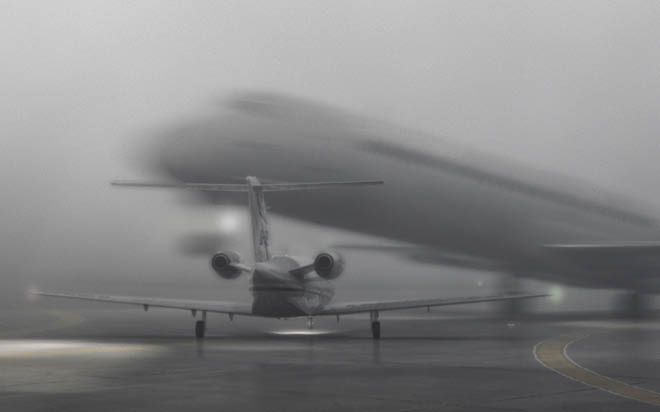
October 8, 2001 was another day of thick fog, but this time in Milan, Italy. A McDonnell Douglas MD-87, part of the Scandinavian Airline System heading for Copenhagen, Denmark with 110 people on board, was ready for takeoff from Milan’s Linate airport when it collided with a Cessna Citation CJ carrying four people bound for Paris. The Cessna pilot had taken the wrong runway. It was the second most serious ground accident in the history of civil aviation after the Tenerife incident.
Due to the complexity of the security management activities system, and the high level of risk that results from the failure of the system, such incidents often lead to real disasters.

On the morning of January 28, 1986 the Space Shuttle Challenger exploded in mid-flight 73 seconds after launch. Up until then, NASA space flights had been considered infallible. After the incident, the U.S. government suspended space missions for almost two years.
 Forensic SEA
